Thursday, December 9, 2021

A 20 Gauge Daly BLE

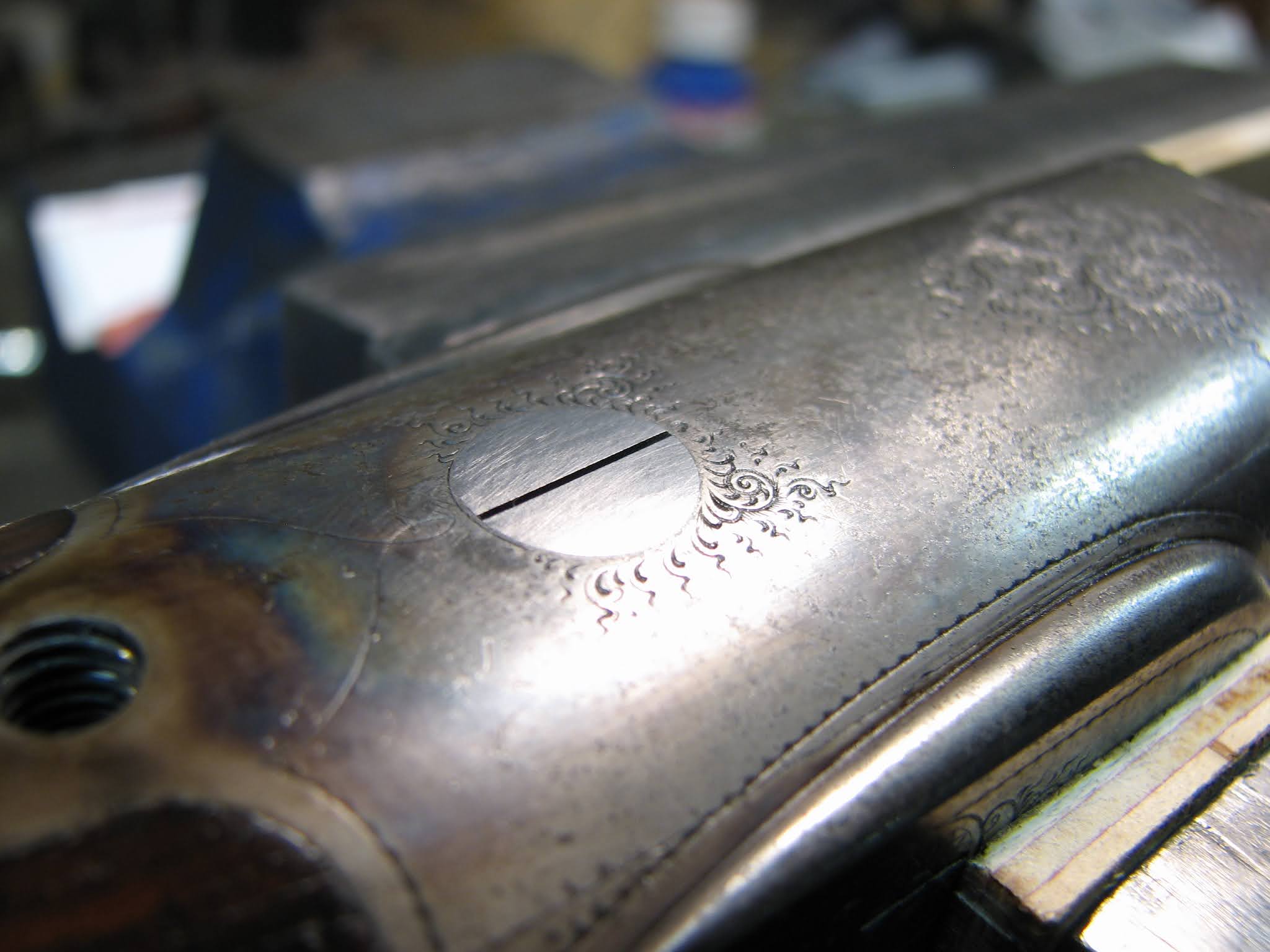
 Here is a Charles Daly (Prussian of course, I don't work on the "other" kinds) BLE in 20 gauge that is also a two-barrel set.  It needed the rim recesses cut because the original rim cuts were of too small a diameter to chamber any current shotshell.  It also had a few other minor issues.  The trigger plate screw had apparently suffered some damage, so an enterprising "gunsmith" widened the slot (a lot) in order to clean it up.  The solution is, as usual, a new screw.  

The threads on the triggerplate screw are proprietary, so after juggling change gears in the lathe, they were single-pointed.

Then, work proceeded in the usual manner.

After I engraved, case-hardened and "aged" the screw, that part of the job is finished.

The extractor retainer screw in one of the barrel sets was also damaged.  The same procedure was followed to correct it.

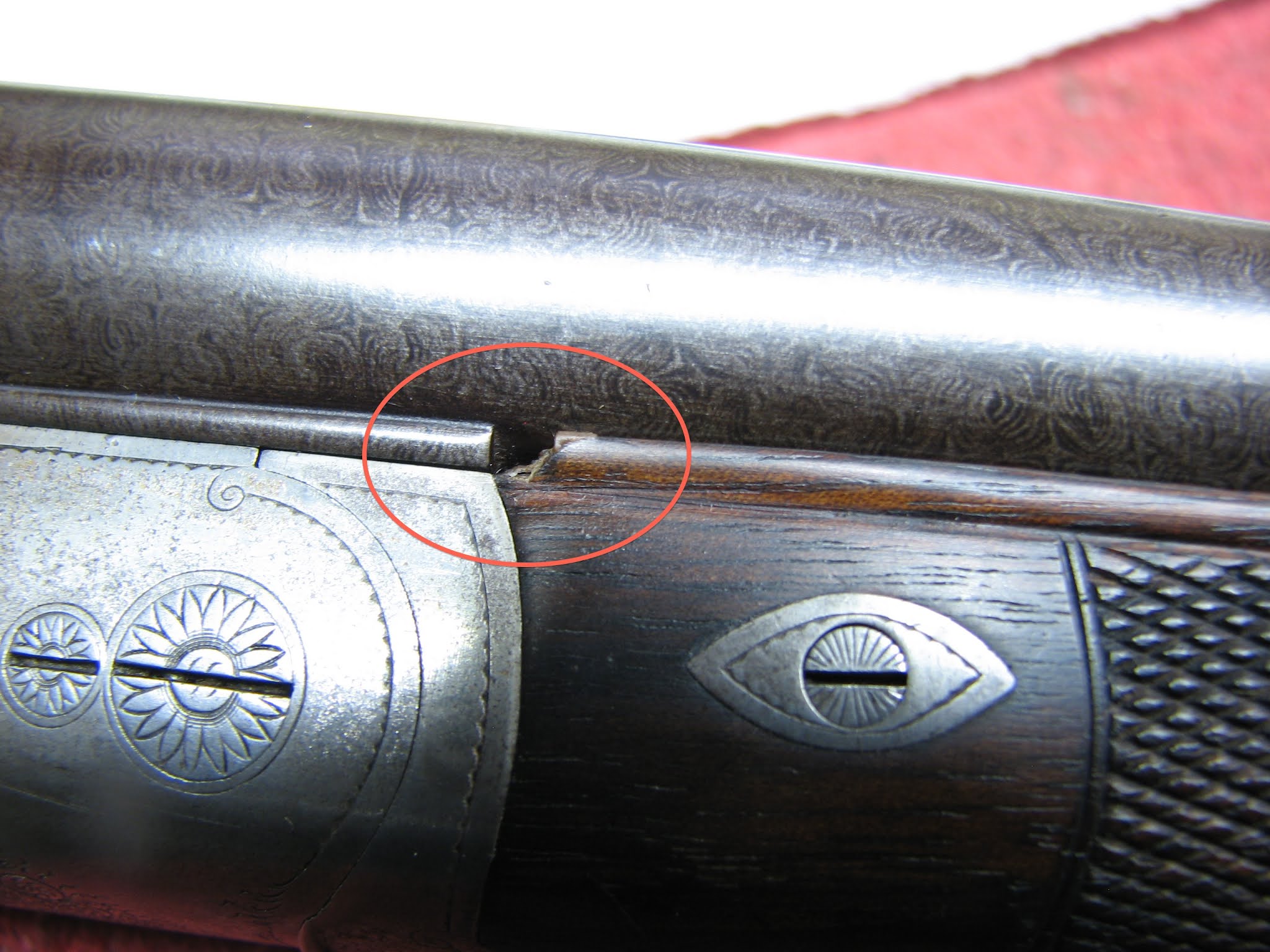
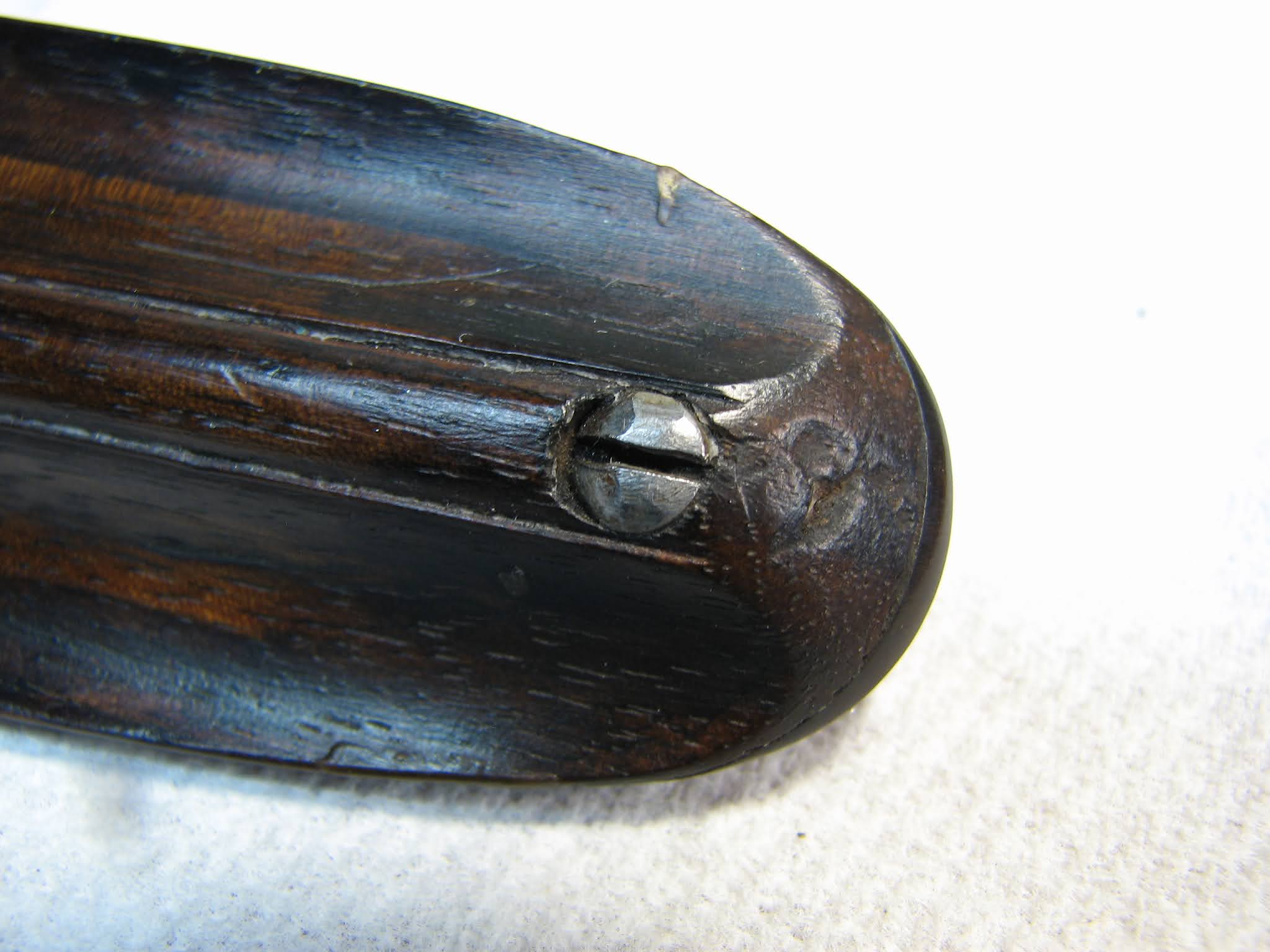
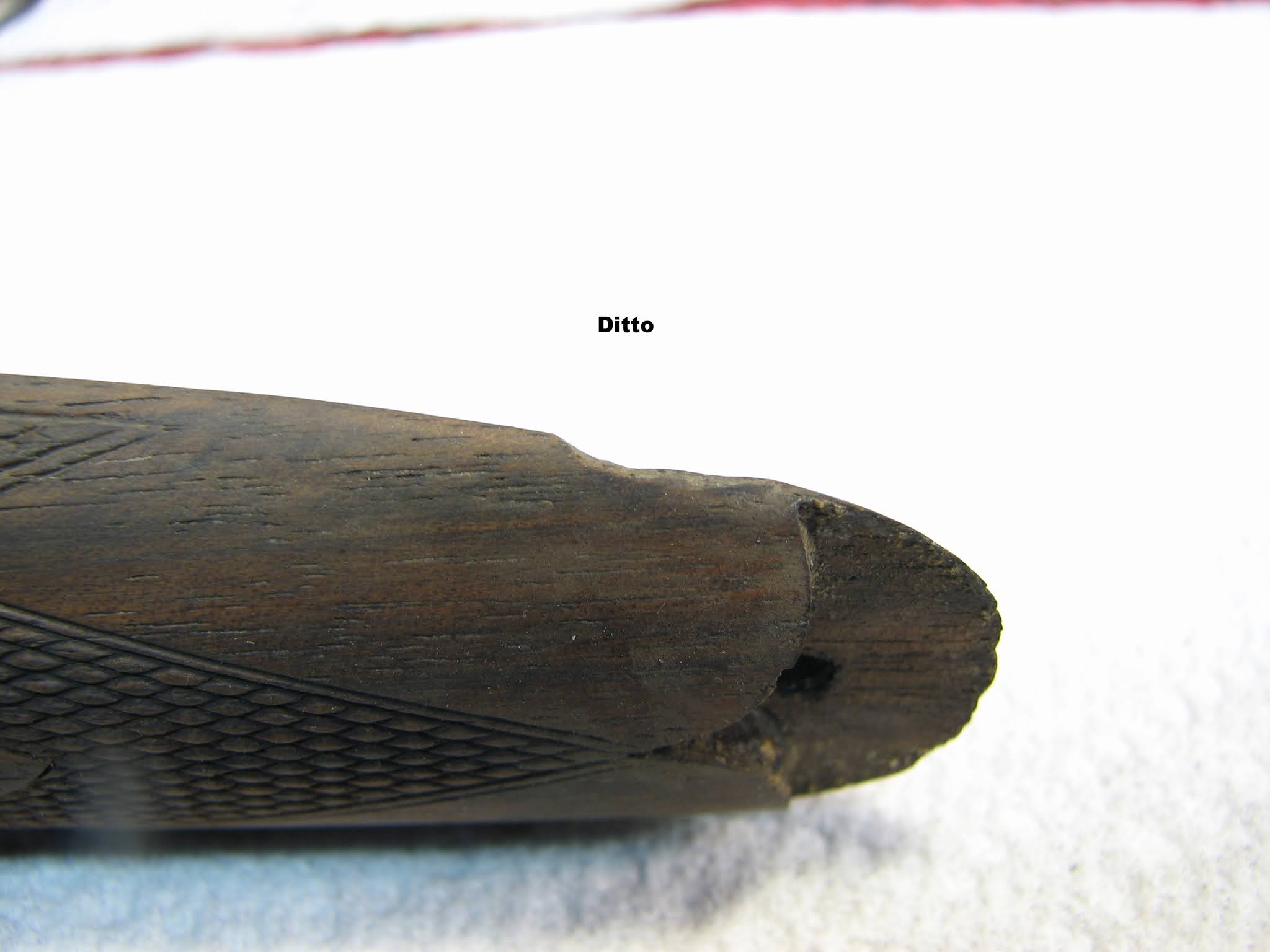
The forend wood also need some attention due to substandard repairs, including the addition of a non-original screw to retain the forend tip.

After dissolving all of the epoxy, this is what was left.

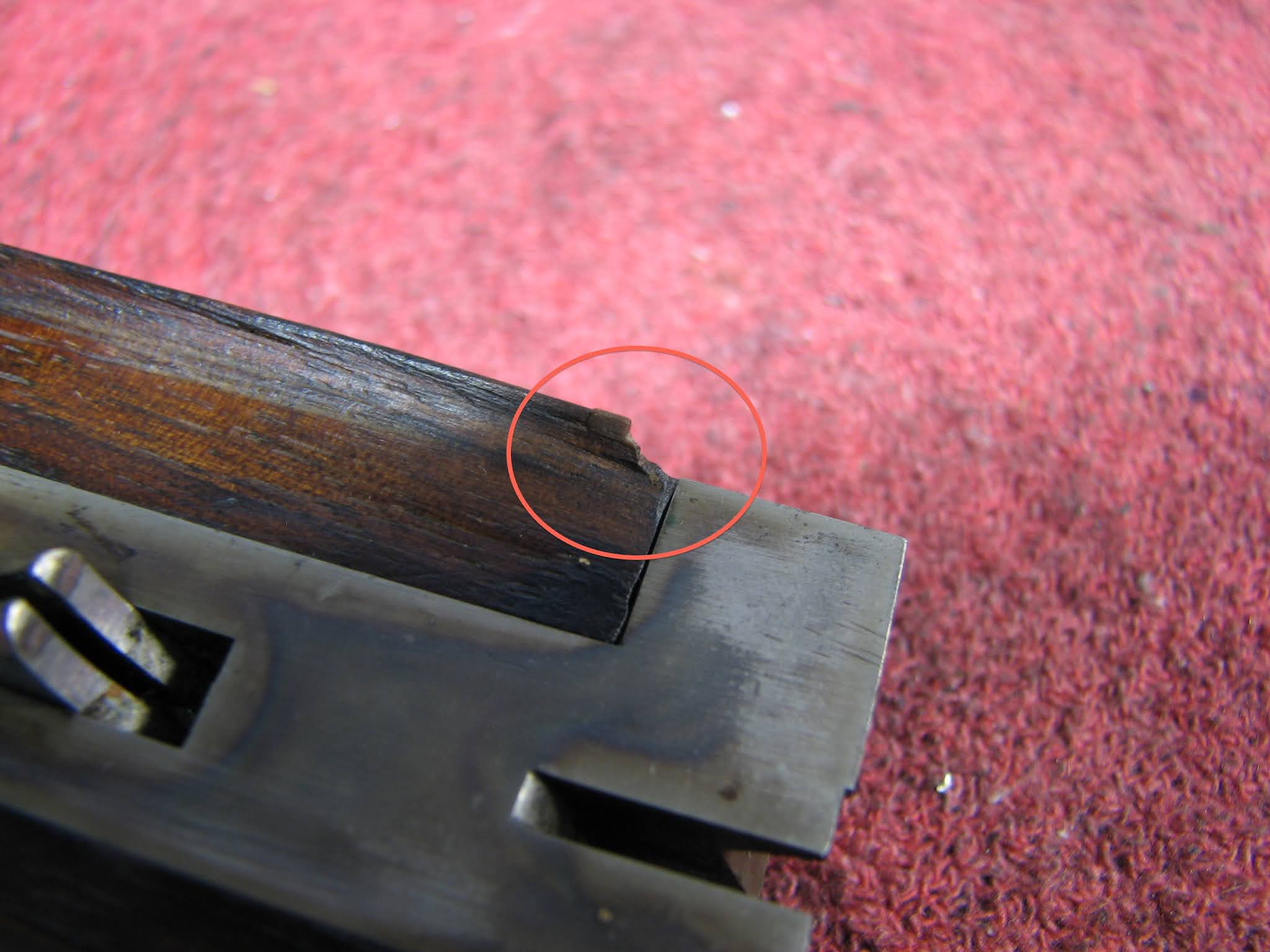
The damaged areas were prepped to receive the new filler pieces.

The filler pieces epoxied in place.

The finished repairs.


Thursday, November 25, 2021

Yet Another Tired Myth

 Here's one that anybody in this business has heard countless times from the American doublegun crowd whenever anything about their chosen brand of gun is called into question:

"Well, they must have made them pretty good for them to still be around a hundred years later."

There are minor variations but that's the basic idea of it.  I'd even agree with it if all of those Smiths, Ithacas and whatever else, had actually stood up to 100 (or more) years of actual use while remaining in good serviceable condition.  The trouble is that when a little logic is applied, the above cliche doesn't hold up.  It is almost a guarantee that when one encounters an American double from the "classic era" that is in high original condition, it very likely spent most of those years between its manufacture and today, sitting in a safe, closet or gun cabinet.  These tend to be higher grade guns, purchased out of want, rather than need.

Lower, "field" grade guns at the time were more likely purchased because of a real need, such as to put meat on the table.  These guns obviously did see regular use and often a lot of it.  The results of this use can be seen in any example of this type of gun encountered today.  Many of these guns exhibit every malady known to doubles, things like failed stocks, loose actions, broken springs, etcetera.  

But even these guns were not in constant use during the decades between then and now.  Consider the following: Among the "better off" sportsmen, the repeating and semi-auto guns almost totally supplanted the double, even before world war two.  After the war, a double probably couldn't be given away.  Indeed, most makers either quit making them or went under entirely.  Even those individuals who depended upon a gun to literally be able to eat, eventually passed on, and many of their heirs would be in a better position than the preceding generation, so they wouldn't need a gun to feed their family.  Then, there were the "expert" gunwriters of the day, who made it their personal crusade to convince shooters that all damascus-barreled doubles were looked upon as ticking time bombs that were best hung on the wall, or even thrown into a lake (literally).

So, realistically, how many years of continual use did most of these guns really see?  A decade or possibly two, before being retired to the closet?  Was that decade or two of use trouble-free?  Probably not.  Based upon the number of these guns I've worked on that exhibit "period" repairs, I'm betting on probably not.

A gun's age and its actual "mileage" rarely correlate.

To quote Carl Sagan: It is far better to grasp the universe as it really is than to persist in delusion, however satisfying and reassuring.


Tuesday, May 18, 2021

A New Grip Cap for a Purdey

 A client brought a Purdey pigeon gun in for some work, part of which was replacing the home made grip cap that was on the gun.  One doesn't simply ring up Purdey and order a grip cap for a pigeon gun that was made sixty years ago, and none commercially available are big enough.  Making one from scratch was the only option.

The cap and screw were blanked from 1018.

 The periphery was filed to shape, then the "dome" and shoulder positions were scribed.

 All shaping was filed by hand.

The top (or bottom, if we're being pedantic) was domed and a shadow line was filed in around the periphery.


 While the cap was being engraved by Geoffroy Gournet, I refinished the butt and forend and recut the checkering.  When the parts arrived from Geoffroy, I charcoal blued the cap and nitre blued the screw.


Saturday, February 20, 2021

What The Actual F**k?

 Believe it or not, there are some that would consider this gun to be in "pretty good shape" and some hacks who might even call it a "restoration".  The nicest thing I could call it would be a train wreck, and that would be being kind.  What it is, shamefully, is an all too common example of typical American gunsmithing.  It is a gun that has so much wrong with it, it makes no sense to expend any further effort upon it.  It is beyond saving.

 The customer wanted the forend lug replaced because the not-really-original had failed.  I say not-really-original because some spawn of sibling-parents saw fit to modify it after discovering that the latch would no longer properly engage.  Why would the latch not engage properly?, the more astute reader might wonder.  Well, because the inletting of the forend latch and iron into the forend wood was done with a Dremel tool, by an individual whose understanding of the gun's mechanics was about on par with his level of craftsmanship.  Due to the latch being set so deeply into the wood (which raises it vertically), the bite on the new forend lug would have to be filed as thin as the failed part.  Correcting the latch placement would have meant new forend wood, along with repair of the forend iron to correct its fit against the frame knuckle, which couldn't (and shouldn't) be done until the barrels were correctly rejointed and so on, down the line of issues, of which there are many.  Unfortunately, that was not the extent of the dipshit-induced damage to the gun, none of which I knew about until the gun arrived and I started looking it over.  Unsurprisingly, the more I looked, the more I found.  

I won't be repairing this one because, as I've already stated, it's beyond any cost-effective reclamation.  It would be best broken for what few salvageable parts remain, or thrown into a deep, deep lake.

Behold


The stellar gunsmiffing on the forend

 The forend lug, Ugh!

 Naturally, it was "put back on face" by the improper method of welding and "refitting" the hook.

Oh yeah, that looks round.


 Does it make full contact?  Not even close.


Monday, February 15, 2021

Handmade Unique Rising Bite Guns

 The guns featured here are of my own design and manufacture.  They are completely handmade, in-house, by me.  From the frames and barrels, to the smallest spring, pin and screw, the entire gun is my work.  No computer-aided anything, no CNC, EDM, castings, rough parts or sub-contractors are employed.  They're made entirely from raw material.  Each and every part, no matter how small, is made from the material most appropriate, then heat-treated for proper function and maximum service-life and, finally, finished to the highest standards, mine.


28 gauge, rising bite, bar-in-wood, sidelock, sidelever side-by-side:  Construction details here:https://vicknairgunsmithing.blogspot.com/2018/06/rising-bite-bar-in-wood-sidelock.html 

SOLD


.30 W.C.F. (7.62x51R), rising bite, bar-in-wood, inboard-mounted and unitized sidelocks, leverless side-by-side:  Construction details here:https://vicknairgunsmithing.blogspot.com/2016/09/from-raw.html

Available, P.O.R.


Coming soon: .22 LR, Boss-style, sidelever, rising bite, over/under double rifle: Construction details here: https://vicknairgunsmithing.blogspot.com/2023/01/a-boss-ish-side-pedal-rising-bite.html


Friday, January 1, 2021

Bigfoot, the Loch Ness Monster and Alien Sightings...

 What do those things have to do with the gun world, you ask?  Well, the answer is simple: Like certain things in the gun world, they don't exist, yet people swear that they have seen them.  

One common example of the gun world equivalent of a Bigfoot sighting is the "16 gauge built on a 20 gauge frame".  Now, almost everyone who has ever spent any amount of time around doublegun guys of a certain age has heard someone brag about their gun that has the above-mentioned configuration, or some variant thereof, like a 20 on a 28 frame, etcetera.  The thing is, there is no such thing.  That's right, there is no such thing as a 12 on a 16 frame, a 16 on a 20 frame, a 20 on a 28 frame or an anything-else on an any-other frame.  

This is because there is not now, nor has there ever been, an industry standard for frame sizes of any gauge, for any break-action gun.  There have been manufacturers that have made use of different frame sizes for different gauges but in the case of American makers, usually there was one size.  Often, the only difference between a 12 gauge and a smaller-bore frame was the bore-center spacing and the corresponding size of the fences, with the actual bar of the frame remaining the same size.  These are not small frames because the entire frame was not scaled down proportionately for the smaller-gauge applications. 

The standout exception to the above rule is the Fox gun.  Fox made two frame sizes (not counting the Super): large and small. The large frames were all twelves, while the sixteens and twenties shared the same small frame, which was scaled down in all dimensions.  Some owners of Fox sixteens will brag to all who will listen that their guns are really built on "20-gauge" frames, because a well-known gunwriter once wrote this entirely subjective opinion in his book on the Fox.  If that's what they want to believe, more power to them but it doesn't make it true.  It could just as easily, and no less accurately, be said that the Fox twenty is built on a sixteen gauge frame but no one will ever say that because it doesn't sound "cool".  Where the Fox is concerned, there are twelves and small frames, period.
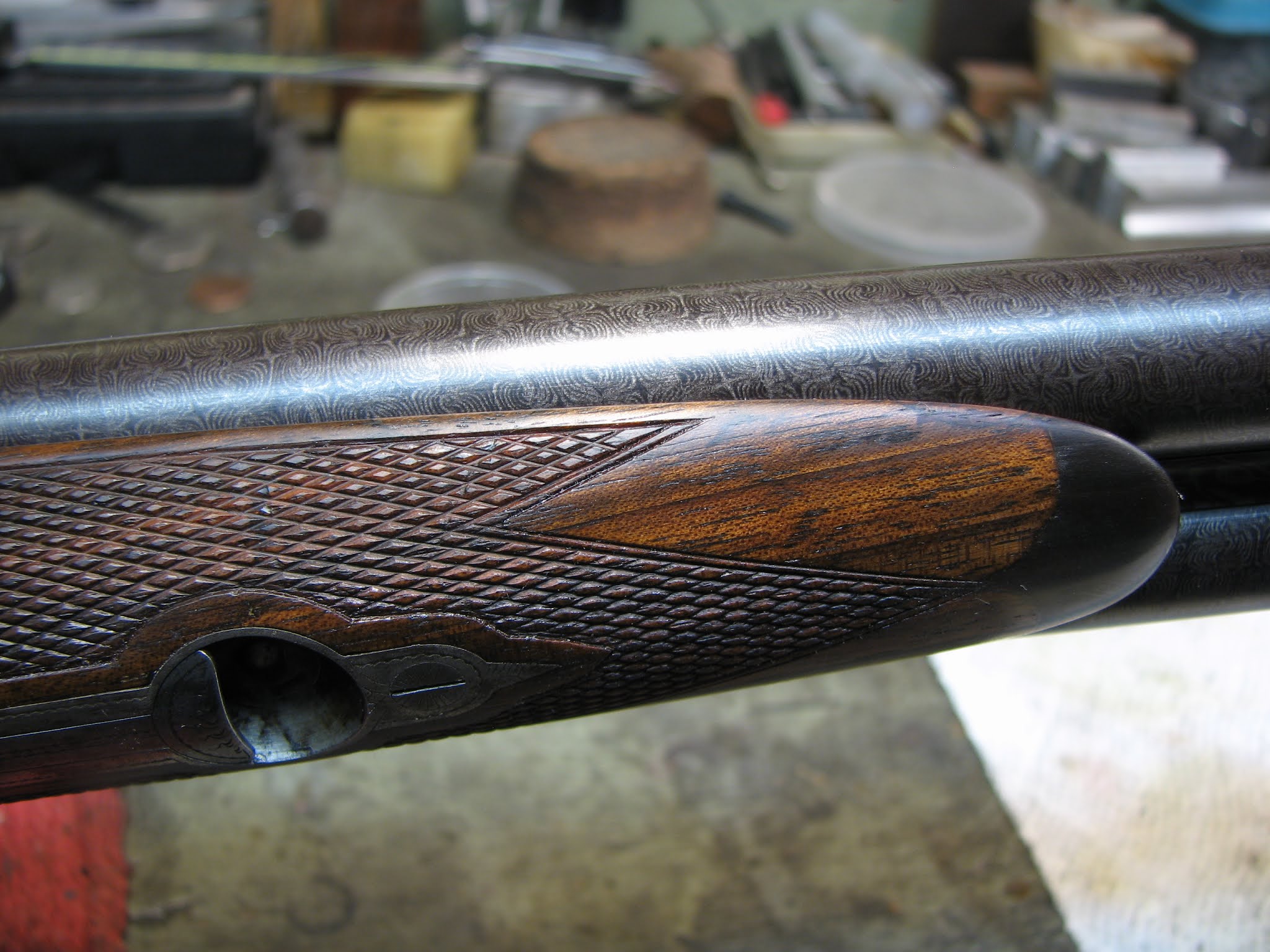
There were Parkers made in 12 gauge on their #1 frame.  Does that make it a 12 on a 16 (or 20) frame?  No, it makes it a 12 gauge on a #1 frame, in exactly the same way that a 12gauge Parker on a #3 frame isn't a 12 gauge on a 10 gauge frame.  It's just a 12 on a #3 frame.

Where a manufacturer actually does make a frame that is specifically scaled to each caliber, things are still not definitive, because one maker's idea of a scaled frame may not be the same as another maker's, for the same caliber.

Another entertaining (or annoying, depending upon one's mood) bit of nonsense is hearing descriptions of the "grade" of walnut that a gun wears.  One will hear terms like AA, AAA, AAAA, Triple X, Exhibition-grade, ad nauseum.  This is also high-grade hogwash for the same reason.  There is no industry standard for grading wood.  Anyone can call any piece of walnut anything that they want, it's completely subjective.

Some more "pulled-from-the-ass wisdom" is that if a shotgun's barrels don't actually meet at  the muzzle, then they have definitively been cut.  The rationale behind this is usually along the line of  "the factory wouldn't let something like that go out the door".  Yeah, OK, as if "the factory" were some temple of righteous perfection in craftsmanship.  Those that subscribe to this line of thinking would literally not believe some of the examples of factory-original misalignment of barrels that I've seen on American doubles.  Here's a of photo of something that, according to some, would never have left the factory.  Unlike those grainy Loch Ness Monster photos, this is actually real.